
Construction
Construction & Renovation Debris in NEPA: A Contractor's Playbook
A working guide to jobsite debris in Scranton and the surrounding boroughs: why plaster and lath wrecks your weight math, how to sequence containers by phase, and what Pennsylvania bans.
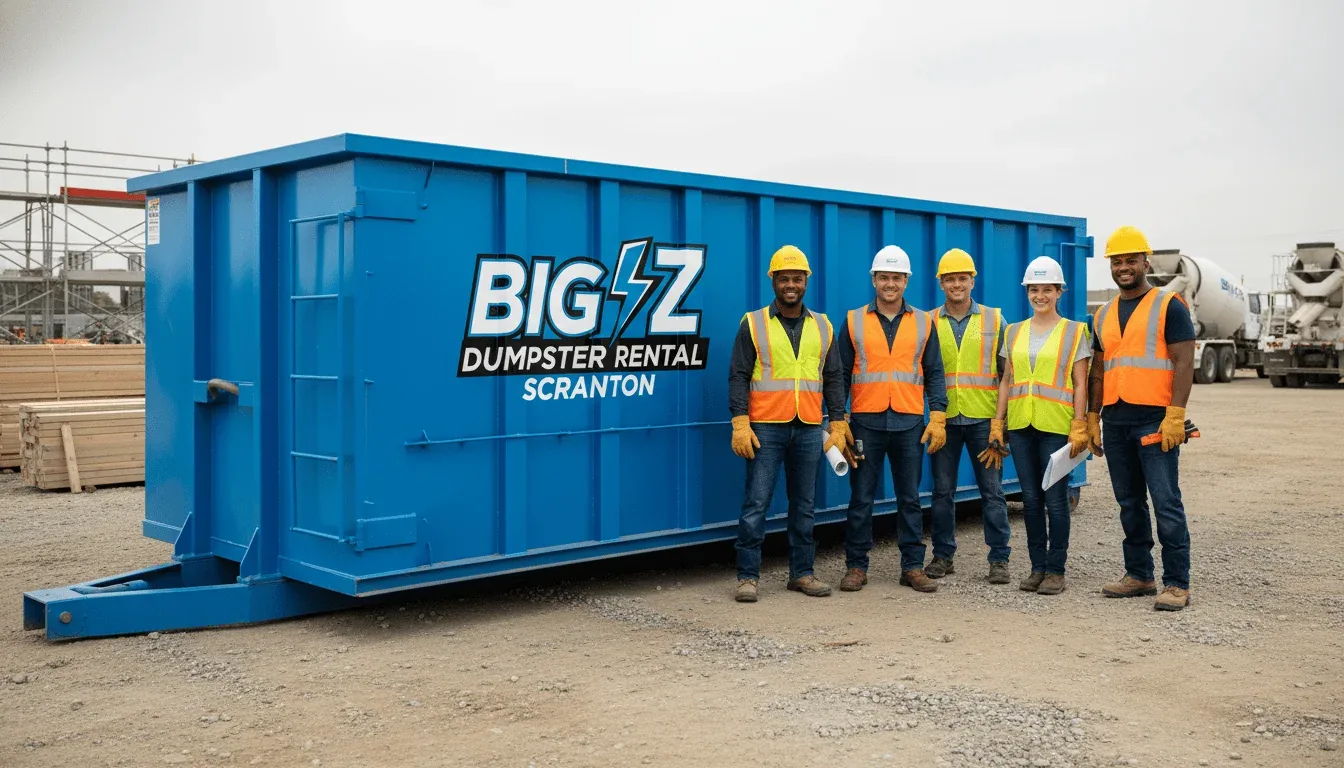
If you build, remodel or run crews anywhere between Scranton, Dunmore, the Mid Valley boroughs and the Abingtons, your debris plan is a line item whether you priced it or not. I have watched good contractors eat four figures of overweight charges on a single kitchen gut because nobody on the job understood what the walls in a 1912 Scranton double block actually weigh. That is not a container problem. That is a planning problem, and it is fixable.
This is the playbook we hand the builders and GCs who run standing accounts with Big Z Dumpster Rental Scranton. It is written for people who swing hammers.
C&D Debris and Household Trash Are Two Different Products
Construction and demolition debris — wood, plaster, drywall, roofing, concrete, brick, fixtures, cabinetry, subfloor — is a separate waste stream from municipal solid waste. It goes to different permitted facilities and is weighed and billed on different schedules. Clean C&D headed to a construction and demolition processing facility typically tips cheaper per ton than mixed household garbage bound for a lined MSW landfill, because a good share of it gets recovered as fuel, aggregate or mulch instead of buried.
What kills that rate is contamination. Throw the jobsite lunch trash, the tenant's abandoned mattress and a half-used bucket of joint compound into an otherwise clean load of framing lumber and the whole container gets reclassified at the scale. One bag of household garbage can move a six-ton load from a C&D rate to an MSW rate. Keep the streams apart, and know the rules before the box arrives — we break them down in what can and cannot go in a dumpster in Lackawanna County.
The NEPA Problem: You Are Not Demoing Drywall. You Are Demoing Plaster and Lath.
This is the single biggest reason estimates blow up in this market, and it is specific to us.
Scranton has one of the oldest intact housing stocks in the country. The coal boom put up tens of thousands of homes here between roughly 1890 and 1930, and almost none of them have drywall behind the paint. They have three-coat wet plaster over wood lath: a scratch coat of lime and sand mortar keyed through the gaps between quarter-inch lath strips, then a brown coat, then a hard finish coat. Some of it is a full inch thick, and some sits over brick or hollow tile.
Plaster and lath runs roughly two to three times the weight of the same volume of modern drywall. That is the whole problem in one sentence. A crew that has been gutting 1990s ranches looks in a 20 yard container, sees it half full, and keeps loading. Meanwhile the scale ticket is already several tons past the included allowance, because plaster is essentially sand and mortar with wood in it. I have watched a two-bedroom second-floor gut on a Green Ridge double put more than seven tons in a box that never looked two-thirds full.
The same trap applies to everything else the coal era left behind: hand-molded brick, cinder block, rubble stone foundation walls, chimney brick, slate roofing and slate walkways. All of it belongs in a dedicated 10 yard heavy container — low sides, high weight allowance, purpose-built for dense material. Ordering a 30 yard for masonry is a mistake in both directions: you cannot legally fill it, and you paid for air. Read the concrete and heavy debris page before you spec anything with mortar in it.
What It Actually Weighs
Print this and tape it inside the job trailer. These are working field numbers for demo material, not lab densities — they assume the mix you actually get, nails and dust included.
| Material | Unit | Typical weight | Fills a 10 yd heavy box at |
|---|---|---|---|
| Plaster and wood lath (three-coat) | 1 cubic yard | 1,400–1,800 lb | ~5–6 cu yd |
| Drywall, demolished | 1 cubic yard | 500–700 lb | ~14 cu yd |
| Solid clay brick with mortar | 1 cubic yard | 2,800–3,200 lb | ~3 cu yd |
| Cinder / concrete block | 1 cubic yard | 2,200–2,600 lb | ~3.5 cu yd |
| Broken concrete, stone foundation | 1 cubic yard | 3,000–4,000 lb | ~2.5 cu yd |
| Asphalt shingles, 3-tab (1 square = 100 sq ft) | 1 square | 230–260 lb | — |
| Asphalt shingles, architectural | 1 square | 350–450 lb | — |
| Slate roofing | 1 square | 700–1,000 lb | — |
| Framing lumber, mixed demo | 1 cubic yard | 300–400 lb | — |
| Mixed light C&D (trim, insulation, cabinetry) | 1 cubic yard | 250–450 lb | — |
Run the arithmetic before you order. A 1,900 square foot roof carrying three layers of architectural shingle is not a job you eyeball — it is close to five tons, which is why our roofing tear-off size guide exists.
Sequence Containers by Phase. Do Not Oversize.
The instinct on a full gut-and-rebuild is to drop a 30 yard on day one and leave it until the punch list. That is the expensive way. You pay to store air for six weeks, you lose the parking space, and every sub on the job treats it as a communal garbage can. Sequence instead, and use swap-outs.
Phase 1 — Demo
Heavy and dense: plaster, lath, tile, masonry, old subfloor, cast iron. Run a 10 or 15 yard box on a short cycle and swap it when it hits weight, not when it hits the rails. On a full-house gut in the Hill Section we will often cycle three or four 10 yard heavy pulls in a week. Same-day delivery and next-day swap-outs mean the crew never stands around waiting on a truck.
Phase 2 — Framing and Rough-In
Light and bulky: cut-offs, sheathing scrap, packaging, duct, conduit, wire spools. This is where a 20 or 30 yard earns its keep, because now you are buying volume instead of tonnage.
Phase 3 — Finish
Small, steady, and it makes a site look sloppy fast. A 15 yard handles trim scrap, flooring offcuts, drywall bits, appliance cardboard and general punch-out mess. Pull it before the final walkthrough. Our construction dumpster rental page and the size selection guide work through the phase math in detail.
Row Homes, Double Blocks and Hillside Streets
Access in this market is its own trade skill. Half the housing here has no side yard, no usable rear access, and a shared driveway with a neighbor who parks in it. Settle these before the truck rolls:
- Carrying distance is a labour cost. Every extra 40 feet from the tear-out to the container, times two men, times a hundred trips, is a real number. Put the box where the material is, even if it costs a permit.
- Street placement needs a permit in the City of Scranton and in several boroughs. Sort it early — see dumpster permits in Scranton. Losing a day to a red tag is worse than the fee.
- Shared driveways and back alleys. Talk to the neighbor before delivery day, not during. Plenty of Mid Valley alleys are too narrow or too soft for a loaded roll-off truck.
- Hillside grades. Streets in the Hill Section, West Side, Green Ridge and the borough hills run steep enough that a container has to be set square with the wheels chocked. Tell dispatch the cross street.
- Protect the surface. Old asphalt aprons and brick pavers mark easily. We set boards as standard on every delivery.
Pull the Value Out Before It Hits the Box
Old Scranton houses are full of metal, and metal is worth real money at NEPA yards. Cast-iron radiators, boiler jackets, cast-iron waste stack, copper supply lines, steel beams and lintels, aluminum storms. Stage them on a pallet instead of burying them under plaster and you turn a tipping expense into a small revenue line — and every pound of iron you pull is a pound you are not paying to landfill. The same logic applies to clean untreated wood and flattened cardboard, which often move as separated loads at better rates.
What Pennsylvania Will Not Let You Bury
These turn up on renovation jobs constantly, especially on tenant turnovers and estate properties, and none of them can ride out in a mixed C&D load:
- Televisions, computers, monitors and laptops — banned from disposal under Pennsylvania's Covered Device Recycling Act. They go to a registered electronics recycler.
- Whole tires — a constant find in coal-era garages and cellars. They require a separate tire program.
- Lead-acid batteries, including the forgotten one under the bench.
- Used oil, fuel, solvents and liquid paints. Latex must be dried solid before disposal; oil-based is household hazardous waste.
- Leaf and yard waste — banned from landfill disposal statewide. Site clearing debris needs its own pull.
- Appliances holding refrigerant, which need certified recovery first.
Current statewide rules live with the Pennsylvania Department of Environmental Protection. When in doubt, call dispatch before it goes in the box. A rejected load costs everybody a day.
Asbestos and Lead: Know Where to Stop
In pre-1980 Scranton housing, asbestos is not a rare surprise. It is routine: white wrap on basement heating pipes, nine-inch floor tile and the black cutback mastic under it, cement-asbestos siding shingles, boiler and furnace jackets, some old duct wrap and joint compound. Lead paint is close to universal in anything built before 1978, which in this city is most of the inventory.
Neither belongs in a roll-off, and neither is a judgment call you make with a pry bar in your hand. Suspect material stops the work until it is tested. Abatement is performed by licensed contractors — Pennsylvania licenses asbestos and lead workers through the Department of Labor & Industry, and firms renovating pre-1978 housing must be RRP-certified under the EPA lead rule. Handled right, it is a scheduling item. Handled wrong, it is a shutdown, a fine and a liability that follows the company.
Clean Sites Pass Inspections, and Winter Charges Rent
Inspectors read a jobsite the way you read a framing job. Debris piled against the structure, blocked egress and a container spilling onto the sidewalk invite a closer look at everything else. A box on site and emptied on schedule is the cheapest professionalism you can buy.
NEPA winter changes the math again. Frozen ground means a container can freeze to the pad, so we set boards. Snow and ice packed into an open box add weight you pay for with no debris to show for it — keep a tarp on heavy loads. And city and borough plough routes mean a street-placed container may have to move on short notice during a storm cycle. Plan pulls around the forecast, not the calendar.
Set Up a Standing Account
If you run more than two or three jobs a year in this valley, stop calling around every time. Mike Zaleski has been running roll-offs out of Providence Road since 2011, and our contractor accounts mean one number, flat-rate pricing you can put straight into a bid, same-day delivery, next-day swap-outs, and a dispatcher who already knows your Dunmore job needs the box on the street and your Clarks Summit job does not. The towns we cover are listed on our service area map.
Ready to get your next job sequenced properly? Call Big Z Dumpster Rental Scranton at (570) 774-4910 for flat-rate contractor pricing, same-day delivery across Lackawanna County and next-day swap-outs — or reach us through the contact page and we will spec the right container for the phase you are in.
Questions this guide did not answer? Call (570) 774-4910. We would rather spend two minutes on the phone than have you order the wrong container.