Waste Guide
What Can (and Can't) Go in a Dumpster in Lackawanna County
A Scranton hauler's straight guide to what belongs in a roll-off, what Pennsylvania law bans outright, where each prohibited item actually goes in Lackawanna County, and how to load so nothing gets rejected.
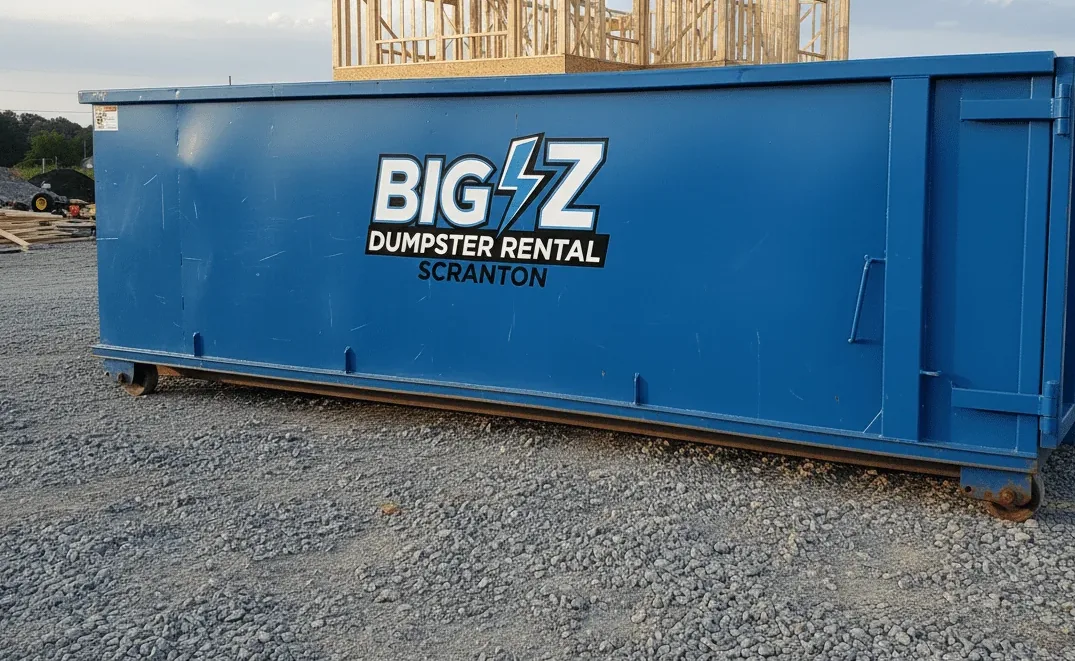
I have been loading roll-offs in Lackawanna County since 2011, and I can tell you that almost every extra fee a customer ever pays traces back to one of two things: a can that was too small, or something in the can that was never supposed to be there. The second one is entirely avoidable, and it is the one nobody warns you about until the scale house flags your load.
Scranton sits in an old anthracite region with a housing stock full of pre-1980 construction, converted coal furnaces, and basements that have been collecting things for four generations. That combination throws material at us that you simply do not see in a newer suburb. So here is the straight answer on what goes in the box, what never does, what Pennsylvania law specifically bans regardless of what any hauler tells you, and where each banned item actually needs to go around here.
The Always-Accepted List
Ninety percent of what people put in our cans is on this list. If your project is a normal cleanout, remodel, or tear-off, you are almost certainly fine.
Household junk and cleanout material
- Furniture — couches, recliners, mattresses, box springs, dressers, bed frames
- Boxes, clothing, toys, books, papers, general basement and attic accumulation
- Non-freon appliances — washers, dryers, electric and gas ranges, dishwashers, water heaters
- Carpet, padding, vinyl flooring, laminate, area rugs
This is the bread and butter of a estate cleanout or a garage purge. If you are working through a whole house, our home cleanout checklist walks the rooms in the order that actually keeps the can filling evenly.
Construction and remodeling debris
- Drywall, plaster and lath (very common in the older Hill Section and Green Ridge homes)
- Dimensional lumber, studs, subfloor, trim, doors, windows
- Kitchen and bath cabinetry, countertops, vanities, tubs, toilets, sinks
- Porch decking, deck framing, railings, stair stringers
- Fencing — wood, chain link, vinyl panels
- Asphalt shingles, felt, ridge cap, flashing
- Siding, soffit, gutters, insulation
Roof tear-offs deserve their own note: shingles are heavy and they eat weight allowance fast. A three-layer tear-off on a modest ranch can outweigh an entire houseful of furniture. Size it against our roofing tear-off size guide before you order.
Heavy material — but in its own dedicated can
Brick, block, concrete, stone, dirt, and asphalt are all accepted, but they go in a dedicated heavy-debris can, usually a 10 yard, filled partway. Mixing a half ton of block into a general construction load is the fastest way to overweight a box and strand a truck. That is why concrete and heavy debris is priced and hauled separately, and why demolition jobs often run two cans side by side.
Yard debris and commercial waste
Branches, brush, shrubs, sod, and storm-downed limbs are all fine — with a Pennsylvania caveat on leaf waste I will cover below. See yard waste removal for how we handle it. Non-hazardous commercial waste from retail, office, restaurant, and light industrial cleanouts is accepted as well.
The Never-Accepted List — and Exactly Why
Every item below is banned for a reason that has teeth. Landfills in Pennsylvania operate under permits with hard conditions, and a load that violates one gets rejected, surcharged, or in bad cases reported.
- Wet paint, stains, solvents, thinners. Liquids are banned outright — landfills cannot accept free liquid because it drives leachate. Latex paint dried solid with kitty litter or hardener, lid off, is generally acceptable. Oil-based paint and solvent never is.
- Motor oil, antifreeze, gasoline, diesel, hydraulic fluid. Same liquid rule, plus these are regulated contaminants. One tipped five-gallon pail can condemn a whole load.
- Pesticides, herbicides, pool chemicals. Concentrated oxidizers and pool shock are a genuine fire risk in a packed can, and they are household hazardous waste by definition.
- Asbestos-containing material. This is a real issue here, not a theoretical one. Pre-1980 Scranton housing routinely has asbestos in 9x9 floor tile and its black mastic, pipe and boiler wrap from converted coal systems, cement siding, and some joint compound. Asbestos requires a licensed abatement contractor and a permitted disposal stream. It never goes in a roll-off. If you are unsure, stop work and get it tested.
- Propane tanks and any pressurized cylinder. Grill tanks, helium, oxygen, refrigerant cans, aerosols in bulk. These explode when a compactor or excavator bucket hits them. This one injures people every year.
- Lithium-ion and lead-acid batteries. Lithium cells punctured under compaction start fires that burn for hours inside a trash truck body. Lead-acid batteries are separately banned by Pennsylvania law from municipal waste disposal.
- Medical and biohazard waste. Sharps, red-bag material, and pharmaceuticals require a regulated disposal chain.
- Tires. Whole tires are restricted from landfill disposal statewide; they float up through cover and trap methane.
- Freon-containing appliances. Refrigerators, freezers, window AC units, dehumidifiers, and mini-splits. Federal Clean Air Act rules require certified refrigerant recovery before the shell can be scrapped or landfilled.
- Railroad ties and creosote timber. Creosote is a regulated wood preservative; treated ties are refused by most permitted facilities.
- Contaminated soil. Anything from around a leaking tank, an old fill area, or a mine-impacted parcel needs characterization first.
- Coal ash and furnace clinker. Very common in old NEPA basements. Ash is dusty, heavy, sometimes still hot, and is handled as a separate waste stream. Do not shovel it into a roll-off.
Pennsylvania's Specific Disposal Rules — This Is the Part People Miss
These are not company policies. They are Commonwealth law, and they apply to every hauler in Lackawanna County whether they mention it or not.
The Covered Device Recycling Act (electronics)
Pennsylvania's Covered Device Recycling Act, Act 108 of 2010, took full effect in January 2013. It bans covered devices from landfill disposal statewide, and it also prohibits haulers from collecting them in curbside trash. Covered devices include televisions of every type, desktop and laptop computers, monitors, tablets, e-readers, and computer peripherals such as keyboards, mice, and printers.
What this means in practice: one CRT television left in the bottom of an otherwise perfect cleanout load is a legal problem, not a judgment call. We cannot take it, and the facility cannot accept it. Set electronics aside before we arrive. Details on the program are on the Pennsylvania DEP site.
Whole tires, lead-acid batteries, and used oil
Pennsylvania restricts whole tires from landfill disposal — they have to be processed. Lead-acid batteries and used motor oil fall under Act 190 of 1996, which keeps them out of municipal waste and puts a take-back obligation on the retailers who sell them. If a shop sold you the battery or the oil, the shop is your disposal answer.
Leaf and yard waste under Act 101
Act 101 of 1988 built Pennsylvania's recycling framework, and it restricts leaf waste from landfill disposal while requiring larger municipalities to run separate leaf waste collection. Brush and branches in a roll-off are routine. Bagged leaves and grass clippings are a different stream and belong in municipal leaf collection or a compost site. The Lackawanna County site is where to confirm current collection windows.
Quick Reference: Accepted vs. Prohibited
| Accepted in a standard roll-off | Never accepted | Where the banned item goes instead |
|---|---|---|
| Furniture, mattresses, household junk | Wet paint, solvents, thinners | County household hazardous waste event; latex can be dried solid |
| Non-freon appliances, water heaters | Refrigerators, freezers, window AC units | Appliance recycler certified to recover refrigerant |
| Drywall, plaster and lath, lumber | Asbestos-containing material | Licensed abatement contractor only |
| Cabinetry, doors, windows, trim | TVs, monitors, computers, tablets, printers | Lackawanna County Recycling Center or retailer e-waste take-back |
| Asphalt shingles, siding, gutters | Propane and pressurized cylinders | Exchange program or propane dealer |
| Carpet, padding, vinyl flooring | Lithium-ion and lead-acid batteries | Retailer take-back; auto parts store for lead-acid |
| Brick, block, concrete (dedicated can) | Tires | Tire retailer or county collection event |
| Brush, branches, shrubs, sod | Bagged leaves and grass clippings | Municipal leaf collection or compost site |
| Fencing, decking, porch material | Railroad ties, creosote timber | Permitted special-waste facility |
| Non-hazardous commercial waste | Motor oil, antifreeze, fuel, coal ash | Retailer take-back or HHW event; ash handled separately |
Scrap metal is the happy exception — a scrap yard will often pay you for appliance shells, cast iron radiators, copper, and aluminum. Pull that out before you load and the can goes further. We break down the local drop-off options in our Lackawanna County recycling and disposal guide.
The Mixed-Load Rule That Costs People Money
Here is the mechanic nobody explains. Transfer stations and landfills do not inspect a load item by item and pull out the one bad thing. They classify the entire load. A single can of paint, one old television, or one grill tank sitting in twenty yards of clean cleanout debris can reclassify that load as contaminated, and the surcharge attaches to the whole ticket — not to the one item.
That is also why a flat rate is a flat rate right up until something prohibited shows up. We are not looking for reasons to add charges. We are passing along what the facility bills us, and a contamination line is not small. Our Scranton dumpster pricing breakdown lays out exactly where those charges come from.
How to Load So Nothing Gets Rejected
- Stage a "no" pile first. Before anything goes in the can, walk the job and set aside paint, chemicals, batteries, electronics, tires, and cylinders in one spot. Deal with them separately.
- Check the basement and the garage shelf. In older Scranton homes, that shelf holds half-empty solvent cans from 1974. It is always the shelf.
- Load heavy and flat on the bottom. Drywall, plaster, and shingles lie flat. Furniture and bulky items go on top so the load settles instead of bridging.
- Break down what you can. Snapping apart a shed, cabinets, and pallets can gain you a third more capacity in the same box.
- Keep the load level with the top rail. Nothing above the rail. An overloaded can cannot be tarped, and an untarped can legally cannot leave the site.
- Watch the driveway. Loose nails and shingle grit are the real hazard, not the can itself. Lay plywood under the rails.
If you are on a permitted job in the city right-of-way, the same load rules apply plus a street placement permit; we cover that in our Scranton permit guide. General household hazardous waste categories are also spelled out plainly by the EPA if you want a second source.
When in Doubt, Just Call and Ask
Fourteen years in and I still get calls that start with "this is probably a dumb question." It never is. Thirty seconds on the phone about one questionable item is free. A contaminated load is not. We would rather tell you where that television or that pail of antifreeze needs to go than haul a box we have to bring back.
Big Z Dumpster Rental has been serving Scranton, Dunmore, Clarks Summit, Old Forge, Moosic, Taylor, and the rest of Lackawanna County since 2011 — licensed, insured, locally owned, flat rate, with same-day delivery when we have a can available. Whether you need a small heavy-debris can or a 30 yard for a full house, or you just want a straight answer about one item, call Mike and the crew at (570) 774-4910 or reach us through our contact page. We will tell you exactly what fits and what does not before the truck rolls.
Questions this guide did not answer? Call (570) 774-4910. We would rather spend two minutes on the phone than have you order the wrong container.